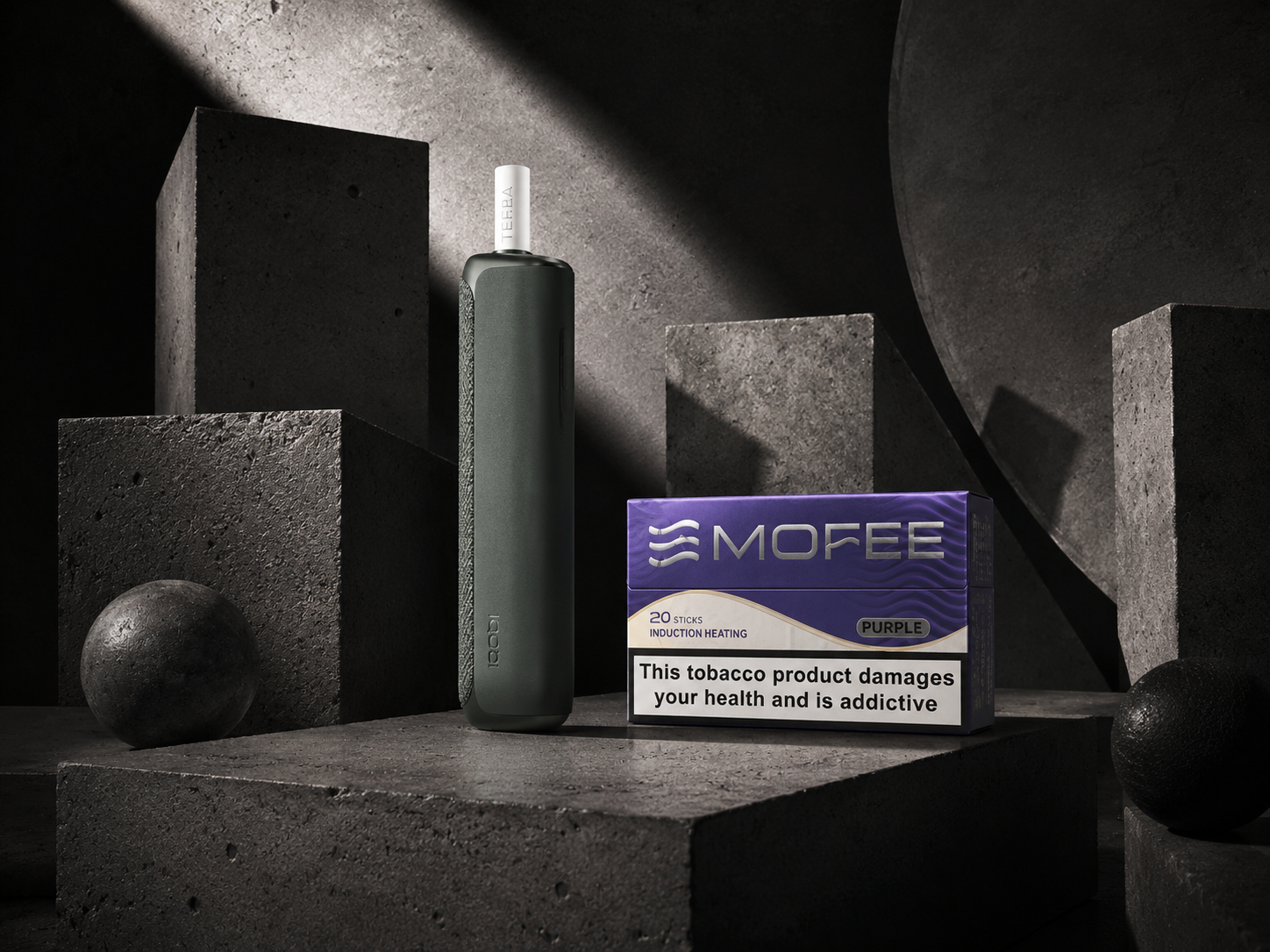
MOFEE is built around a simple but important engineering idea: move the component into the consumable and let an induction-enabled device control the thermal process from outside. That approach separates the heating mechanism from the exposed blade used by older generations of heated-tobacco hardware. For consumers evaluating this alternative ecosystem, стики MOFEE are therefore more interesting as an integrated engineering concept than as a conventional tobacco accessory. The manufacturer, LONO International, describes MOFEE as a heat-not-burn brand developed around induction heating, with research and development activity dating back to 2016 and production infrastructure connected to its parent group’s tobacco and packaging operations.
The practical appeal comes from the interaction between the stick and compatible induction hardware. Instead of a heated blade entering the tobacco, MOFEE uses an internal heating element designed to interact with an electromagnetic field. That change can reduce direct tobacco contact with the holder, simplify routine maintenance, and create a more controlled path for heat and aerosol. It also means the consumable itself becomes an important part of the system’s technical architecture rather than merely a container for processed tobacco.
The Hidden Heating Element Is the Real Design Story
MOFEE’s manufacturer describes its heating construction as a sheet-chip heating element combined with magnetic heating technology. The principle is similar to other induction-based systems: the compatible device generates an electromagnetic field, while the metal component inside the stick responds to that field and transfers heat to the surrounding tobacco material.
This architecture changes the mechanical relationship between the user and the device. With a traditional blade system, the heating element is physically inserted into the tobacco. With an induction-compatible MOFEE stick, the relevant heating component remains inside the consumable. The device therefore becomes a controller and energy source rather than a holder containing an exposed heater that directly contacts tobacco.
From a consumer perspective, that is significant because it removes one of the most mechanically exposed parts of older heated-tobacco designs. It also makes the consumable more specialized: the internal structure has to be manufactured specifically to work with an induction field.
Less Residue Means a Massively Simplified Maintenance Routine
Daily maintenance is rarely the reason someone buys new consumer electronics, but it often becomes one of the strongest ownership differences after several months. Blade-based heated-tobacco systems can collect tobacco particles around the heating area because the blade repeatedly enters the consumable. MOFEE’s induction construction moves the heating element away from that exposed position.
- The heating component is incorporated into the stick rather than exposed inside the holder.
- Induction heating avoids repeated physical penetration of the tobacco by a hot blade.
- The consumable is designed around controlled interaction with compatible induction hardware.
- Reduced direct tobacco contact can significantly simplify the holder’s routine maintenance.
- Everyday operation becomes primarily an insertion, automated heating, session, and removal process.
It is important to keep the benefit in perspective. Simplified maintenance does not mean that an electronic device should never be cared for. Exterior surfaces, charging connections, storage conditions, and general hygiene remain relevant. The improvement is specifically about reducing the repetitive internal cleaning associated with exposed heating blades.
Fewer Exposed Components Change the Mechanical Reliability Equation
Removing the physical blade also eliminates a particular category of mechanical stress. A blade has to enter and leave the consumable repeatedly, and incorrect insertion or accidental contact can create opportunities for damage. An induction system does not require that same physical interaction.
This does not make MOFEE or an ILUMA-compatible device immune to failure. Batteries age, electronic components can malfunction, and any small consumer device can be damaged through drops, moisture, or inappropriate handling. The more defensible engineering advantage is narrower: the system removes an exposed heating component that previously represented a recurring point of contact between tobacco and hardware.
That is particularly relevant for frequent users. A component that is no longer repeatedly exposed to tobacco material has fewer opportunities to become coated with residue or mechanically disturbed during normal operation.
Specialized Compatibility Is the Price of the New Architecture
MOFEE is positioned by its manufacturer as an induction-heated stick compatible with popular induction heating devices, while retail listings specifically identify MOFEE variants for IQOS ILUMA. The key point is that compatibility depends on the internal heating element and the geometry of the consumable. Users should therefore follow the compatibility information supplied for the specific device and stick rather than assuming that every heated-tobacco consumable is interchangeable.
This is an important distinction between modern induction ecosystems and older universal-looking formats. The closer the relationship between consumable and hardware, the greater the potential for controlled operation, but also the narrower the range of components that can safely be treated as compatible.
Internal Airflow Is Just as Important as the Tobacco Blend
Flavor perception is strongly influenced by how an aerosol moves through the stick. MOFEE’s overall design places the tobacco, heating element, airflow path, and filter structure into a coordinated consumable. The heating process therefore cannot be evaluated independently from the way air and aerosol travel through the finished stick.
A controlled airflow path affects draw resistance, aerosol density, temperature perception, and the speed at which aromatic compounds reach the user. Even when two sticks contain broadly similar tobacco, differences in airflow architecture can make one feel softer, denser, warmer, or more aromatic than another.
This is where the internal core optimization becomes relevant. Rather than relying solely on the composition of the tobacco blend, MOFEE’s approach uses the physical structure of the stick to influence how the heated material is experienced. The manufacturer’s product descriptions emphasize carefully controlled heating intended to release tobacco aroma without the characteristic burnt smell associated with combustion.
MOFEE’s Flavor Portfolio Moves From Classic Tobacco to Cooling and Fruit
The current MOFEE portfolio is not restricted to one conventional tobacco character. Manufacturer information identifies several core profiles, while the wider product range includes both traditional tobacco formulations and more aromatic options. This gives the platform a relatively broad sensory range for an induction-oriented consumable.
- Silver is positioned around a clean tobacco profile with a softer aromatic character.
- Bronze emphasizes mellow classic tobacco with a light wine-like aromatic nuance.
- Amber combines tobacco with warmer woody notes.
- Green pairs tobacco with a pronounced mint cooling effect.
- Purple introduces a sweet blueberry-oriented fruit profile.
- Hawaii-series variants extend the range toward tropical, strawberry, and menthol combinations.
The flavor descriptions should be treated as sensory direction rather than an objective measurement of intensity. Individual perception varies significantly, particularly with cooling, fruit sweetness, woody notes, and aromatic tobacco. Storage conditions and personal draw style can also affect the perceived balance of a session.
Classic Profiles Reveal MOFEE’s Approach to Tobacco Aromatics
Among the more traditional formulations, Amber and Bronze illustrate two different approaches. Amber is built around the combination of toasted tobacco and woody aromatic notes, creating a warmer profile that is likely to appeal to users who prefer less overtly fruity character. Bronze moves toward classic tobacco with a subtle wine-like aromatic layer, giving the profile additional depth without turning it into a strongly flavored fruit product.
Green takes the opposite route. Its combination of tobacco and mint creates a cooler sensory finish, changing the perceived weight of the tobacco and making the overall draw feel fresher. Purple goes further into aromatic territory, using blueberry notes to introduce sweetness and fruit character.
The result is a range that can accommodate very different sensory preferences without requiring a different heating platform. The hardware remains consistent while the consumable determines much of the flavor identity.
Magnetic Heating Targets a More Consistent Thermal Process
The manufacturer lists magnetic heating as the core heating mode for MOFEE’s compatible system and specifies a preheating period of approximately 20 seconds in its published product parameters. The same documentation describes an experience time of around four minutes and ten seconds for the associated heating system. Actual session behavior can vary by compatible device and individual use.
The value of electronic temperature control is not simply speed. Controlled heating helps avoid the large temperature fluctuations that can occur when a user relies on direct combustion or a physically inserted heater. A more stable thermal environment can contribute to a cleaner and more repeatable sensory profile, although it cannot make every session identical.
For flavor analysis, this matters because excessive heat can flatten delicate aromatic distinctions while insufficient heat can make tobacco feel thin. A controlled induction process gives the manufacturer greater opportunity to target a specific balance between intensity, smoothness, and aroma release.
The Lifestyle Benefit Is Built From Small Frictions Removed Every Day
The strongest consumer advantage of MOFEE’s architecture is cumulative. There is less direct contact between tobacco and the holder, no exposed heating blade in the consumable interface, and a more standardized relationship between the device and the stick. Those details may sound minor individually, but frequent users experience them repeatedly.
Instead of periodically dealing with residue around a blade, the user spends more of the ownership cycle simply operating the device. Instead of physically inserting tobacco around a heater, the system relies on an engineered consumable containing the necessary induction component. And instead of one fixed flavor profile, the range provides several directions from traditional tobacco to mint, fruit, woody, and aromatic combinations.
A Significantly Reduced Aroma Footprint Still Requires Realistic Expectations
MOFEE belongs to the heated-tobacco category, so it should not be described as odorless. The absence of conventional combustion changes the nature of the emitted aerosol and eliminates ash and cigarette smoke, while the selected flavor formulation determines much of the remaining aroma.
For indoor lifestyle considerations, this can mean a significantly reduced aroma footprint compared with conventional cigarette smoke, but the result depends on ventilation, room size, fabrics, the particular flavor, and individual sensitivity. Mint and fruit-oriented formulations can also leave a different aromatic impression from classic tobacco blends.
What the MOFEE Ecosystem Gets Right—and Where the Limits Remain
MOFEE’s most convincing technical characteristic is the coherence between its heating concept and its consumable design. The internal heating element supports induction, the holder avoids the exposed blade architecture of older systems, and the flavor range is developed around controlled heating rather than combustion.
There are limitations that prospective users should understand. MOFEE sticks contain nicotine, which is addictive, and heated-tobacco products are not risk-free. They should not be treated as harmless consumer electronics or as a health product. Compatibility also needs to be checked carefully because induction-oriented sticks are not automatically suitable for every heated-tobacco device.
From a consumer-electronics perspective, though, MOFEE demonstrates how a relatively small change in component placement can reshape an entire ownership experience. Moving the heating element into the stick reduces mechanical interaction, simplifies routine maintenance, and allows the consumable to become an active part of the thermal system. Combined with magnetic induction, controlled airflow, and a diverse flavor portfolio, that architecture creates a streamlined alternative to legacy blade-based operation. Its strongest benefit is not a single headline specification, but the cumulative reduction of everyday friction and the more controlled relationship between hardware, heat, tobacco, and sensory delivery.